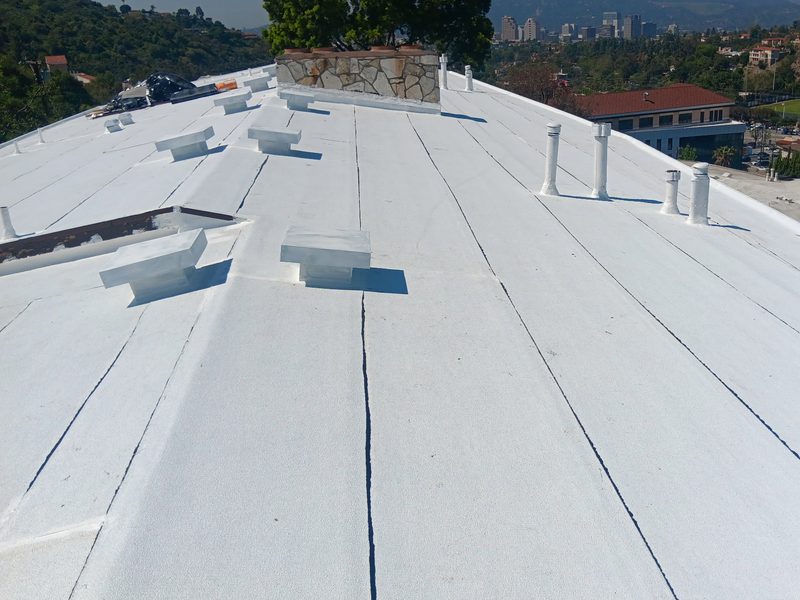
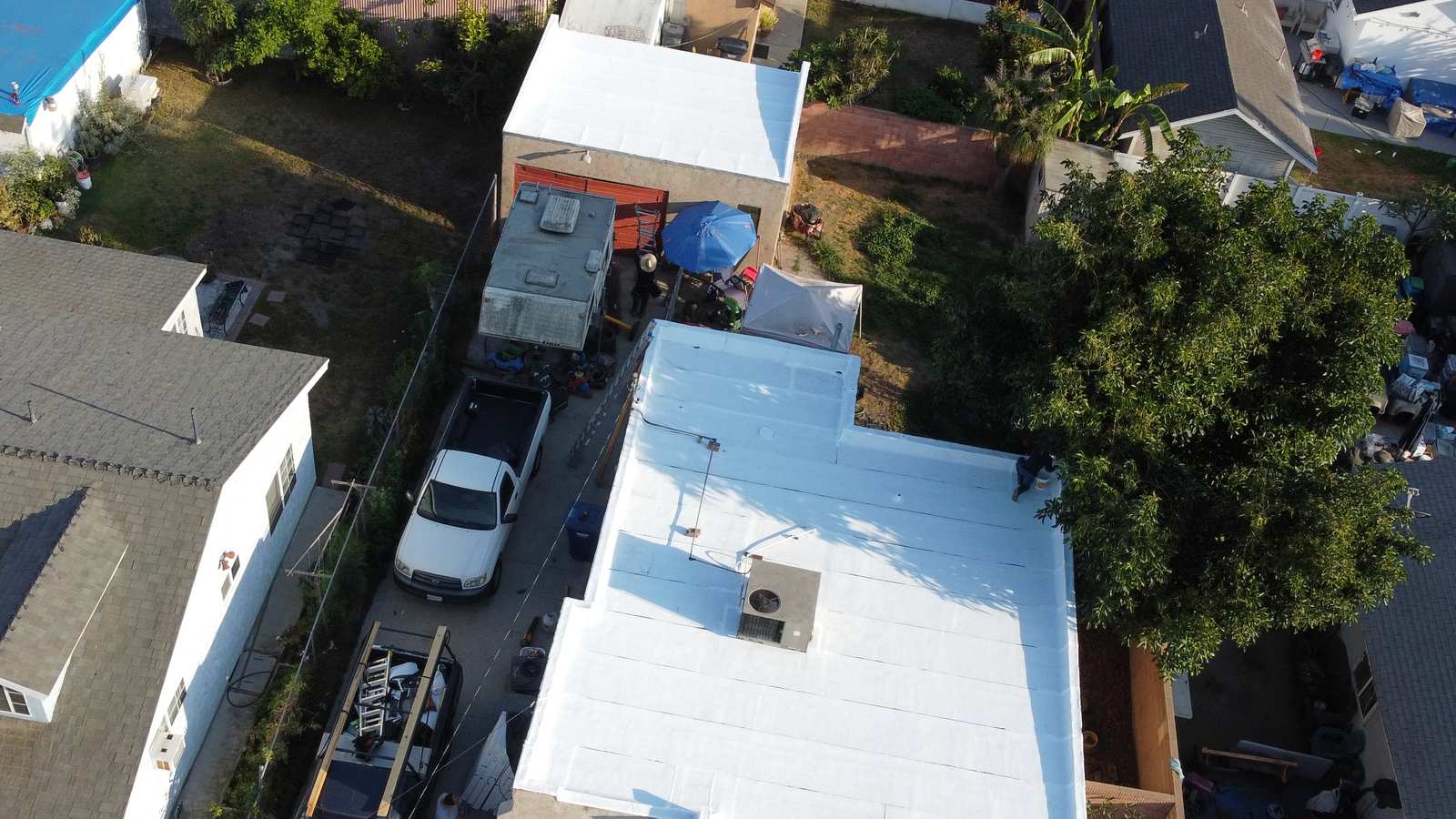
We repair and replace the flat and low-slope roofs on commercial buildings in El Monte, CA. The covering is a membrane, so the seams, flashings, drains, and edge metal decide how long it lasts.
You can call us for a single leaking seam or for a full membrane replacement. Tell us the building type and the rough roof area, and we will put a free quote together.
On this page
Commercial buildings we roof
We roof offices, multi-unit residential buildings, and managed commercial property across El Monte. The roofs are flat or low-slope, so a membrane covers most of the area. A larger roof means additional days on site and a bigger crew, so size drives the schedule.
Some of these buildings also have a sloped section, and we roof that too. We install tile, asphalt shingle, and standing seam metal on those sections.
How we work on a low-slope commercial roof
We price a low-slope roof from its seams, flashings, drains, and edge metal. Water gets in at those points long before the rest of the membrane fails. We check each of those details before we price the rest of the roof.
We also need a way onto the roof and somewhere safe to stage material. On a tight commercial site, that shapes the plan as much as the membrane does.
Then we tell you whether the roof needs a repair or a replacement, and why. A membrane leaking at a few seams is worth repairing. Once it has failed across the whole roof, a repair will not hold.
We also count the layers already on the deck before we quote. Old layers add tear-off time and disposal, and both belong in the quote.
On a replacement we strip the old system and check the decking underneath. Soft or rotted boards are the usual surprise on a commercial tear-off, and they add to the price. We pull those boards out and show you the wood before the new roof covers it.
We lay the new base and cap layers next, in the order the system calls for. On torch-down work we heat weld the cap sheet, so the seams fuse together. We clear our material and the old roof off the property when we finish.
Drains, curbs, parapets, and pipe openings each get their own flashing. We build those last, once the rest of the membrane is down.
Ponding, drains, and edges
Standing water damages a low-slope roof for as long as it sits there. Ponding reveals exactly where the slope or the drainage stopped working. Drains and scuppers carry that water off the building, and a clogged drain lets it stand.
Leaves and debris from nearby trees are the usual reason a drain stops working. The trapped water adds weight, and the seams around the drain start to open.
Wind is the other problem, and it starts at the edges. Edge metal takes that wind on every commercial building, and it lifts before the membrane does. Once that happens, wind gets under the membrane and pulls it back from the edge.
Torch-down and TPO on your building
Torch-down modified bitumen is our default low-slope system on commercial property here. We use the Polyglass Polyfresko G cap sheet, and its white granulated surface reflects heat. Polyglass lists the full product properties in its Kool Roof Solutions brochure if you want to read them.
We install TPO as well, and we will price it for your building. TPO suits some roofs better than torch-down does. We have repaired both systems, and TPO repairs cost more and take longer.
We price the system you ask for, and we tell you which one we would pick. Our flat roofing page goes through the low-slope options in more depth.
Repairs and upkeep between replacements
A commercial roof rarely fails everywhere at once. A seam opens, a drain backs up, or a pipe flashing cracks, and the water gets in. We take those repairs on commercial property, including small jobs on a building that stays open and busy.
Fixing one detail early keeps the deck under it dry. We clear drains and check flashings after a storm, and that catches problems while they are still small.
Working on an occupied building
Most commercial roofs we work on sit over a building that stays open. We plan access, staging, and material handling around the way you use the place. Tell us about deliveries, gates, parking, and hours before we quote the building.
Rooftop units, curbs, and walkways slow us down as we move across the deck. Those details change the schedule, so we build them into the plan before we start.
Permits on a commercial re-roof
Most commercial re-roofs need a permit, and the building department with jurisdiction decides that. We help you obtain that permit when your building needs one. Which office that is depends on the address, inside the El Monte city line or outside it.
El Monte Building and Safety runs plan review, permits, and inspections inside the city. The same office inspects the finished work on a permitted re-roof. A building just outside the city line files with a different office instead.
What you get in writing
Our estimate is free, and it prices the roofing work on your building. It identifies the system, the roof area, and the details we plan to rebuild. That written scope is what we price from, and it is what we build on your roof.
A documented condition report is a separate service, and it carries its own fee. Escrow files and building records are the usual reasons to order one.
Insurers sometimes ask for a roof inspection before they renew or write coverage. That inspection is the paid report, and we do it on request.
Where we work on commercial roofs in El Monte
We quote low-slope commercial work across El Monte and the communities around the city. That covers Downtown and River East, plus 91731, 91732, and 91733, areas the Census uses to organize local data. The service areas page lists every other place we take commercial roofing work.
Request a commercial roofing estimate
Call us with the building type, the address, and a rough idea of the roof area. That is enough for us to start the quote and tell you what happens next. If you would rather write it out, send us the building and roof details.
Frequently Asked Questions
Low-slope questions on a commercial building usually come down to estimating, membrane choice, and drainage. We price the seams, the flashings, the drains, and the edge metal before the open field. The answers below cover each of those three, and the estimate on your building stays free.
How to estimate a commercial roofing job?
Send us the building type, the address, and a rough roof area to start. We then measure the deck, count the existing layers, and price the flashing your roof needs. Access, staging, and an occupied building change the schedule, so we price each commercial building separately.
What is better, TPO or torch-down roofing?
Torch-down modified bitumen is our default low-slope system, and we install TPO when you want it. TPO repairs take more skill and cost more than a cap sheet repair. We price both systems for your building and explain which one we would recommend.
What are the downsides of a flat roof?
Water drains slowly, so a settled deck or a blocked drain leaves it standing on the membrane. Seams, drains, curbs, and edge metal then carry most of the leak risk. Standing water adds weight, and wind lifts the edge metal before the membrane fails.