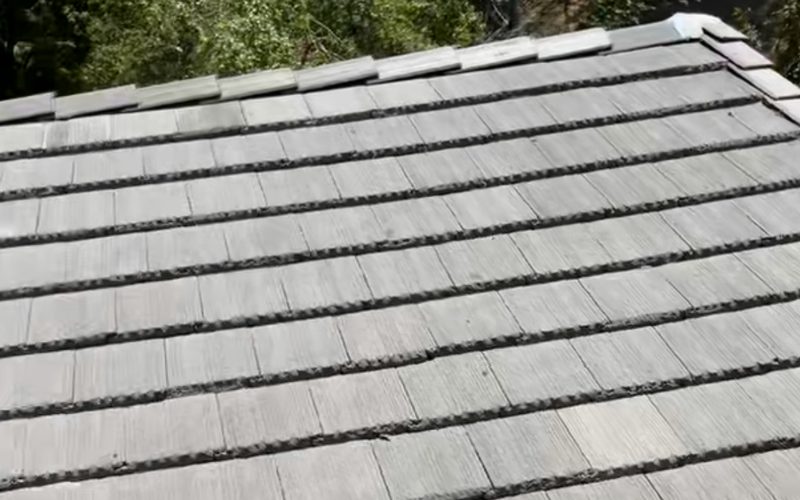
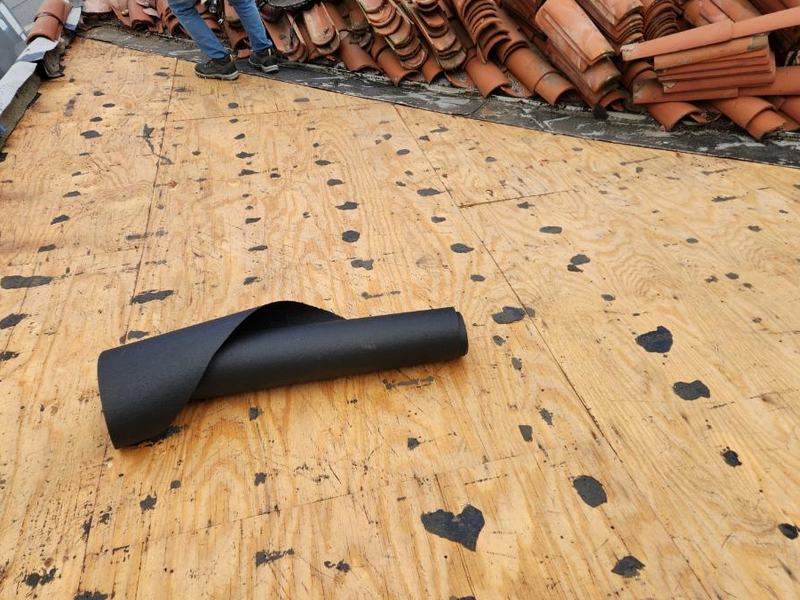
On most tile roofs the tile is still sound, and the underlayment beneath it has failed. Underlayment is the waterproof material that keeps water out of the decking below. We lift your tile, replace that failed layer, and restack the same tile you already own.
That is most of the tile work we do in El Monte, CA. It also explains why a tile roof rarely requires a complete replacement. Call us for a free estimate, or tell us what you can see from the ground.
On this page
What a lift and relay job involves
A lift and relay replaces the failed underlayment and reuses the tile you already own. We work in sections instead of stripping the entire roof open at one time. We follow the same installation order on every tile roof we relay.
We lift the tile off in sections and stack it safely on your property.
We remove the failed underlayment completely, down to the bare decking.
We inspect the sheathing underneath and replace any board that has gone soft.
We install new underlayment across the entire exposed area.
We restack your original tile over the new underlayment.
Concrete and clay tile systems have published installation guidance. The Tile Roofing Industry Alliance installation guides cover how these systems go together. They also tell installers to follow the tile manufacturer's own requirements.
Reusing your existing tile is where the savings come from on a relay project. We purchase replacement pieces only when a tile breaks or a match is missing.
Some tile breaks on every relay project, so each estimate carries an allowance for the pieces we lose. We price damaged wood under the tile separately, at the rate written into your estimate.
We keep the open area small as the project moves across the roof surface. That protects the decking if the weather turns while your tile is off.
The layer that fails first on a tile roof
Underlayment fails long before tile does, so a roof that looks fine can still leak. Tile sheds most of the rainfall and shades the layer below from direct sun. The underlayment catches whatever gets past the tile and keeps it off the decking.
Heat and sunlight break that layer down over the years. Once it cracks or tears, water reaches the wooden decking underneath. The tile above it is often still in good condition.
Clay, concrete, and slate
We work on clay, concrete, and slate tile roofs across El Monte, CA. Each material handles differently once our crew starts lifting the tile and stacking it. Clay and slate break more easily than concrete does, so we work slower on both of those materials.
Matching an older clay profile is often impossible, so we plan for that possibility before the project begins. Slate comes off and goes back on the same way, because the stone material lasts longer than the underlayment.
What we find when the tile comes off
Rotted sheathing under the tile is the most common reason a tile project grows larger. We flag that risk in your estimate before any of the work starts on your roof. Flashing is the other problem we find often on these tile roofs.
Roof to wall joints, chimneys, and valleys are where leaks usually begin. New underlayment over old flashing that has already failed will not stop the leak.
We show you exactly what we find up there. If the decking is solid, the project stays close to the original scope. If we have to replace boards, we price that change before we complete the work.
When a tile roof needs more than underlayment
A lift and relay is not always the right answer. If too much of the tile is broken, you end up buying most of a new roof anyway. Damage to the framing under the deck is a separate project at a different price.
A roof patched badly several times can cost more to salvage than to redo. When the numbers land that way, we price the replacement instead.
We price a tile roof from measurements and from what the roof shows once we are on it. A few conditions move that estimate more than the rest of the details do. The list below names the conditions we check before we quote a tile roof.
The roof area, measured in squares of one hundred square feet each.
The number of stories the building has, and how we access the roof.
The pitch, which changes how quickly and how safely we can work.
Whether the tile material is clay, concrete, or slate.
How much decking we have to replace before the tile goes back on.
How much flashing we have to rebuild at the roof joints.
A lift and relay usually costs less than tearing off and buying an entire new tile roof. Reusing your existing tile removes the largest material cost from the estimate.
How the estimate works
The estimate is free on every tile project we quote. Satellite imagery lets us size most tile roofs without setting a ladder against the house. That means we can give you a price range early, before anyone climbs on the roof.
Satellite imagery shows area and pitch accurately enough, but not cracked flashing or a soft spot in the decking.
A written condition report is separate paid work, usually for escrow or an insurance requirement. Tell us which document you need when you call. Our roof inspection page explains what that report covers.
Permits and city requirements
We help you pull a roofing permit wherever the city requires one for tile work. The office that reviews your permit application decides approval and timing. Requirements for tile roofing change from one city to the next, and from one project to the next.
We can often price a tile project over the phone, and the estimate is free. We quote tile work in Park El Monte, Norwood-Cherrylee, and the rest of El Monte. We work in 91731, 91732, and 91733, areas the Census uses to organize local data.
Call (626) 323-8814 to discuss your tile roof. Start on the contact page if you would rather write it out. See the rest of our roofing services for the other systems we install.
Frequently Asked Questions
Tile work here usually turns on the hidden underlayment layer beneath the tile itself. Weight, breakage, and a failed underlayment shape every tile quote we write in El Monte. The answers below compare tile with shingle and cover the drawbacks and the service life.
Is a tile roof better than shingles?
Neither one wins in every situation, and the building decides more than the material does. Tile and shingle roofing systems differ in material cost, weight, and upkeep. On both systems, the underlayment beneath the covering keeps the water out of the decking.
What are the disadvantages of tile roofs?
Tile is heavy, so the framing underneath the deck has to carry that load. Pieces break during handling, and matching an older clay profile is often impossible. Every tile estimate we write carries an allowance for the pieces we lose.
How many years will a tile roof last?
Tile outlives its underlayment by decades, so the felt below fails long before the tile does. That is why most tile roofs here need a lift and relay rather than a new roof. Heat and sunlight break that layer down, and water then reaches the decking.