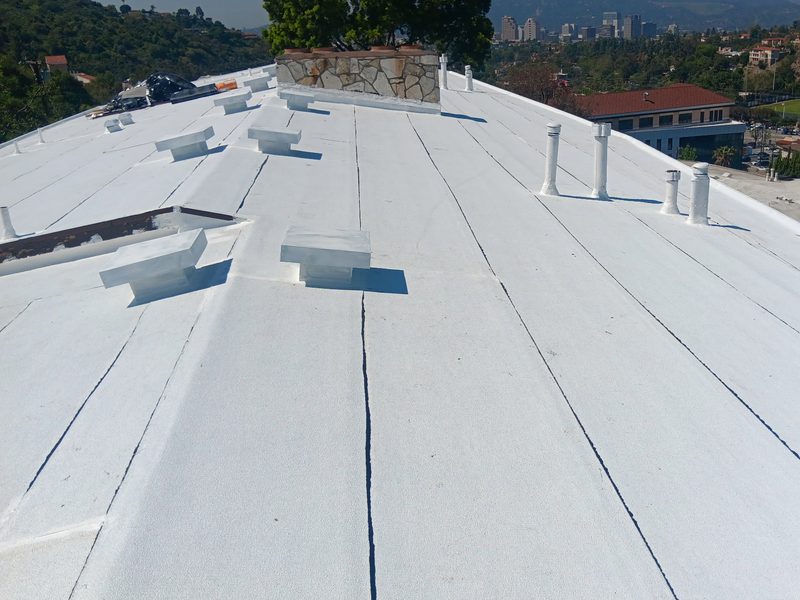
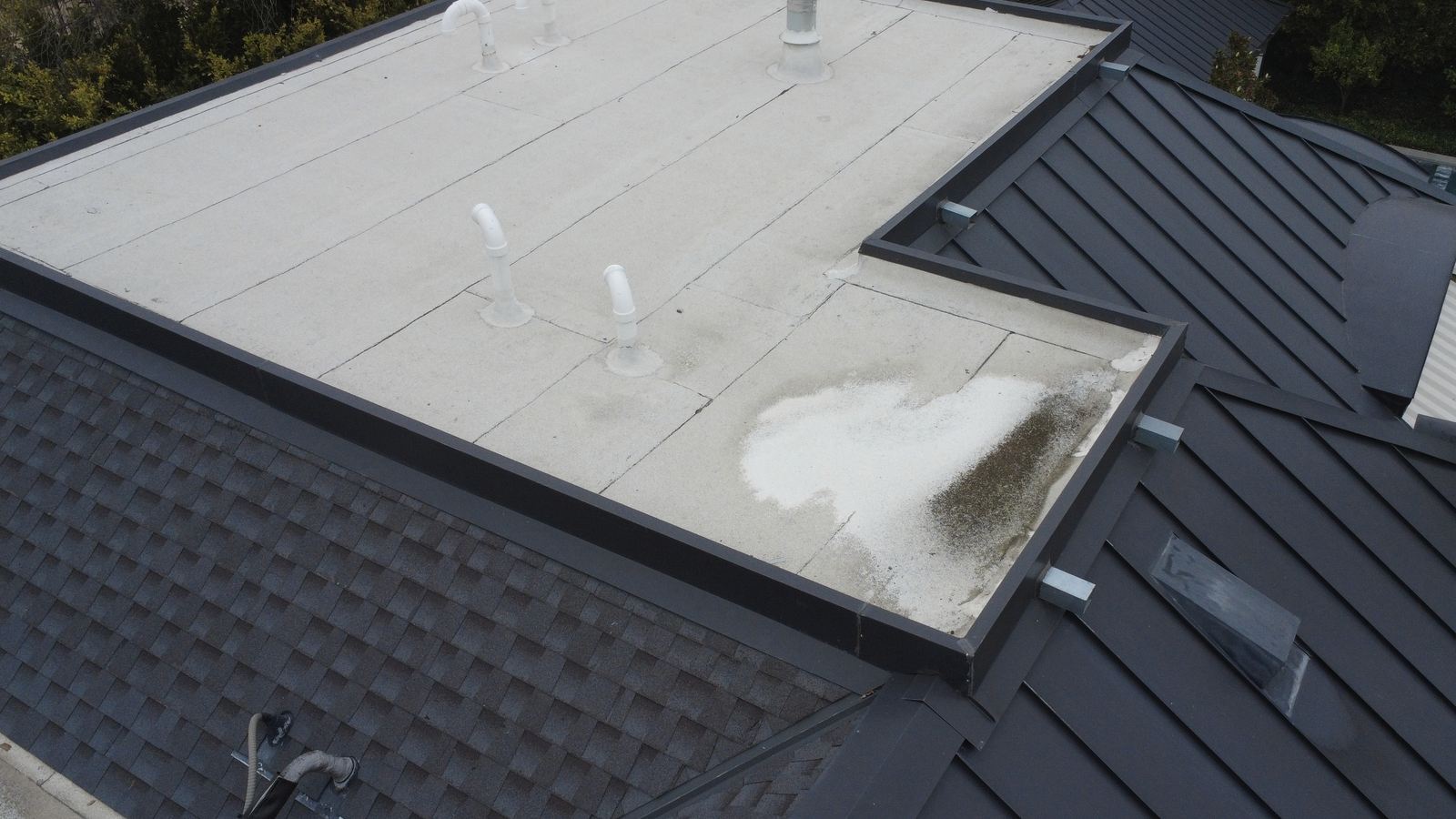
A TPO roof is single ply membrane, rolled out over a low-slope deck in wide sheets. We fasten or adhere those sheets, then weld the seams together with hot air. That weld is what keeps water out of the building.
We install TPO on commercial roofs across El Monte, and we repair the membranes already up there.
On this page
How we install a TPO roof
We start at the deck on every building, because the deck determines how we can attach the membrane. Insulation or a cover board goes down over it first. Then comes the membrane, either mechanically fastened through those layers or fully adhered to them.
The deck type and the wind exposure decide which of the two we use.
We weld the seams, flash the curbs, and lock the edges down. Then we go back over the finished welds with a probe.
Curbs, drains, and penetrations
The open membrane is rarely where a commercial roof lets go first. Trouble starts at the rooftop units, drains, pipes, and skylights, and each one requires its own flashing. We prefabricate corners where we can and hand weld the rest.
Blocked drains sit behind many of the leaks we repair.
The reflective white surface
TPO sheets are usually white, and a white surface reflects sunlight instead of holding heat against the membrane. Drainage and detailing still set how long a membrane lasts on a low-slope roof here. So we check the seams, the flashings, and the drains.
If your roof holds water after a rain, tell us. That is a drainage problem, and a reflective sheet will not fix it.
TPO or a torch-down cap sheet
We do install TPO membrane, although torch-down modified bitumen remains our default low-slope system across El Monte commercial property. The deck type, the number of roof penetrations, and your maintenance plan point to the right system. Our torch-down roofing page covers that cap sheet system, its layers, and the way we build it.
Repairing an existing TPO roof
A welded seam can be opened up, cleaned, and welded again. A puncture takes a patch cut from the same membrane, welded down the same way. We look at the field, the seams, and the flashings before we recommend anything bigger than a patch.
Scattered failures at the details are worth repairing. A membrane failing all over at once is past that point. Our regular roof repair work covers commercial decks too.
What we need before we quote
Square footage, deck type, and the number of rooftop units give us most of the picture. The age of the existing membrane and its repair history help us just as much. A business usually keeps running underneath the roof while we work.
Tell us about deliveries, gates, and operating hours before we bid. A commercial re-roof usually needs a permit, and we help you obtain one. The Building Standards Commission code page lists the statewide code editions now in force.
Our welded membrane work runs through El Monte's Downtown and Mountain View areas. We bid on low-slope buildings in 91731, 91732, and 91733. The Census uses those areas to organize local data.
Get a free TPO estimate
Send us the address, the approximate square footage, and what the roof has been doing. Our estimate for commercial low-slope work is free. You can also start with our contact form, and our service areas page lists everywhere we cover.
TPO performance on an El Monte commercial building rests on the welded seams and the drainage path. Rooftop units, drains, pipes, and skylights each add another flashing detail along that same path. The answers below cover repair difficulty, the service life, and the other name for the material.
What are the downsides of TPO roofing?
TPO repairs are harder and more expensive than the same repairs on a torch-down cap sheet. The membrane also depends entirely on its welded seams and on its edge flashings. Rooftop units, drains, pipes, and skylights each require their own hand welded flashing detail.
How many years does a TPO roof last?
The welded seams and the flashings decide it, not the sheet on its own. A blocked drain holds water on those seams for days at a time. We inspect the drainage path before we quote a new membrane for a building.
What is another name for a TPO roof?
Roofers usually call it single ply membrane, because one welded sheet covers the deck. We fasten or adhere the sheets, then weld every seam with hot air. The deck type and the wind exposure determine which attachment method we specify.